


Staying connected while traveling internationally used to mean juggling physical SIM cards, hunting for local vendors at the airport, or paying eye-watering roaming fees.
That experience is changing fast. Embedded SIM technology is reshaping mobile communication for travelers, businesses, and connected devices. This article explains how and why eSIMs matter more than most people realize.
Contents
Travel Is Booming, and So Is the Need for Better Connectivity
Experts estimate outbound travel spending to reach USD$ 8 billion by 2030. Although domestic trips comprise the bulk of these trips, people are moving and crossing borders more and expecting their phones to keep up without skipping a beat.
International travel is a key driver behind the growing appetite for eSIM solutions. When you land in a foreign country, the last thing you want is to be stuck searching for a local SIM vendor or waiting for your carrier to activate an expensive international plan. The old model simply can’t deliver that at scale anymore. Instead, travelers want immediate and reliable access. The demand for seamless global coverage has pushed both carriers and device makers to rethink how mobile connectivity works from the ground up.
Connectivity Shouldn’t Be the Hard Part
Imagine you’re on a ferry cutting through the Aegean, island-hopping across Greece. The scenery is stunning, but your signal keeps dropping. Weak or inconsistent cellphone signals in remote or maritime areas make switching between local towers and international roaming agreements unpredictable.
That’s exactly where eSim Greece options prove their worth. Rather than locking you into one mobile network operator with spotty local infrastructure, an embedded SIM lets your device scan and connect to the strongest available signal in real time. It supports profile switching between multiple carrier profiles without requiring a physical swap. So, whether you’re docked in Santorini or drifting between Mykonos and Paros, your device finds the best available connection automatically. No fumbling, no downtime, no missed messages.
Why the Technology Behind eSIMs Is a Genuine Leap Forward
The embedded SIM form factor is fundamentally different from what came before. Rather than a removable chip tied to one carrier, it’s a programmable component built directly into your mobile device. Network profiles are delivered over-the-air through remote SIM provisioning, meaning you can add, change, or remove a carrier profile without touching the phone.
This is managed through an eSIM management platform that handles everything from SIM profiles to over-the-air (OTA) updates and SIM refresh cycles when network configurations change. Think of it like a network app store: you browse available data plans, select one, and it installs directly onto your device.
Some platforms support custom profile definition and API integration for enterprise customers who need more control over how their devices connect. The underlying system runs on a secure operating system, which is one of the more underappreciated security benefits of the technology. Your subscription management happens in an encrypted environment, and the carrier can push carrier profiles remotely without exposing sensitive device data. This matters enormously for businesses thinking about security and compliance.
More Than Just Travel: eSIMs Power the Connected World
Consumer devices are the most visible use case, but the implications stretch much further. IoT devices, from smart meters to fleet trackers, depend on reliable IoT connectivity across borders. Cellular IoT applications increasingly rely on M2M connectivity (machine-to-machine), and managing hundreds or thousands of endpoints manually would be a nightmare.
That’s where digital profiles, factory systems, and multi-IMSI connectivity (International Mobile Subscriber Identity) come in, allowing operators to pre-load multiple carrier agreements onto a single device and switch between them based on location or signal quality.
The electric vehicle (EV) industry is another space where eSIM connectivity is becoming standard. Modern EVs need persistent cellular connectivity for navigation updates, OTA software patches, and emergency services. A built-in embedded SIM with access to roaming networks removes the dependency on WiFi hotspots and ensures the car stays connected whether it’s parked in Paris or driving through rural Spain.
Private networks and core network operators are also embracing this model. For enterprises running mission-critical infrastructure, inter-carrier roaming and permanent roaming options mean that business continuity doesn’t depend on a single carrier’s coverage map.
What This Means If You Travel Often
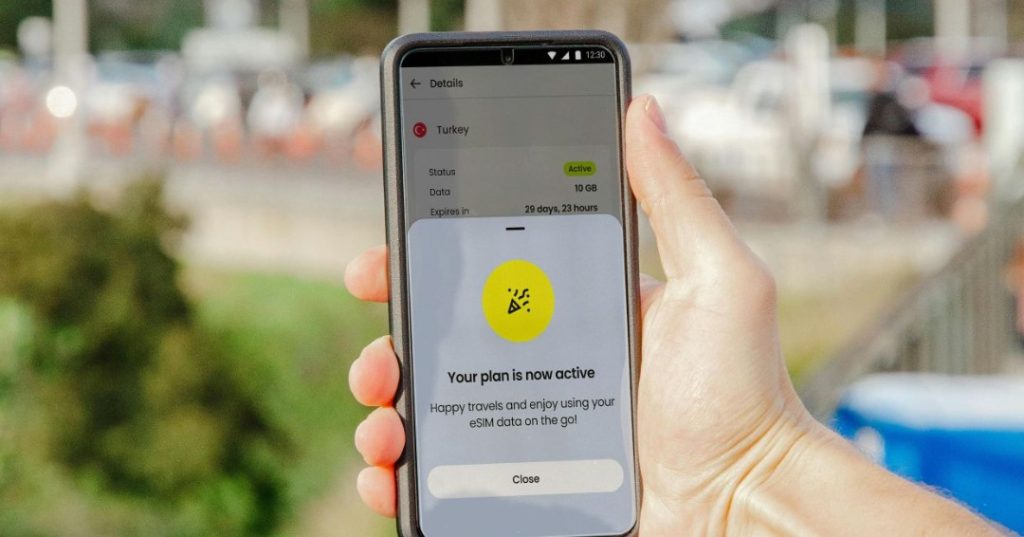
Understanding why eSIMs are best for overseas travels comes down to one thing: control. You choose your plan before you board the plane. You activate it with a QR code. You’re connected the moment you land.
Here’s what that experience typically looks like in practice:
- Before departure: You purchase a local or regional data plan through your carrier’s app or a third-party eSIM provider. The plan installs digitally onto your device via cellular networks.
- On arrival: Your phone connects automatically to the designated network. If coverage is weak, the device can switch to another available profile without any manual input.
The device manufacturer increasingly bakes this flexibility in from the start. Customer experience is a design requirement and not an afterthought. Even travel retailers using POS systems are beginning to leverage eSIM architecture to manage device lifecycle across distributed locations.
The Road Ahead
Global mobile coverage is getting better, but the infrastructure alone isn’t what’s driving the shift. It’s the combination of smarter hardware, flexible cellular connectivity models, and platforms that make provisioning invisible to the end user. ESIM technology has quietly moved from novelty to necessity. For anyone who crosses borders regularly, whether for business or leisure, that shift is already paying dividends.