

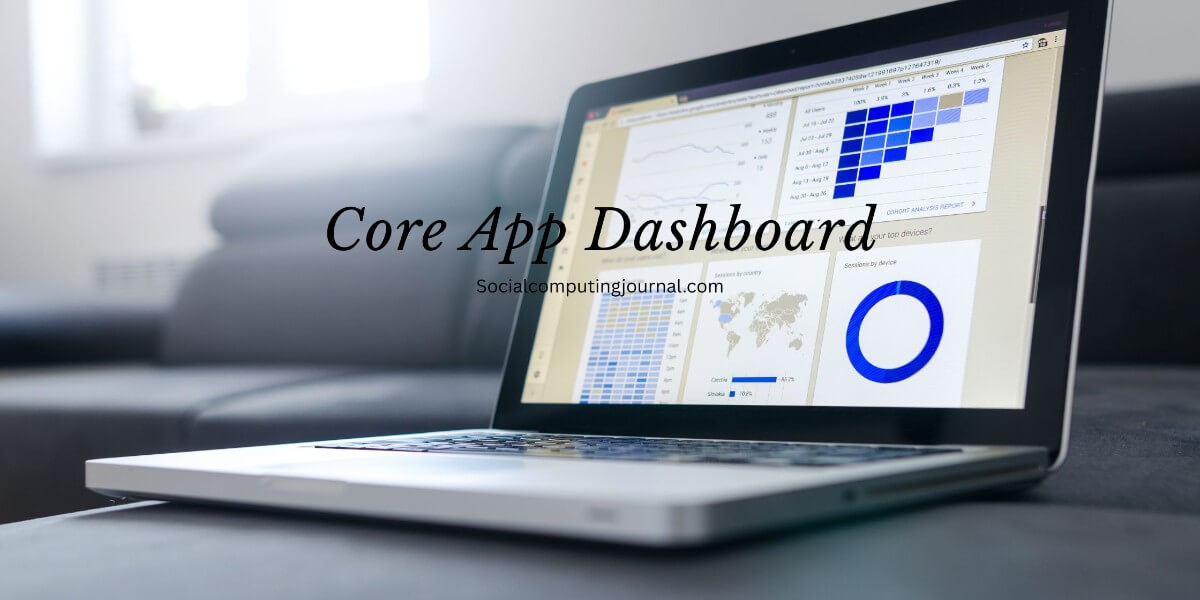
Have you ever wondered why the Core App Dashboard has become more significant for modern apps? Honestly, a powerful Core App Dashboard Guide may help you get to know the application better. It is a single dashboard that displays all essential information about the app. The modern digital environment cannot allow developers and business teams to operate without app performance monitoring, real-time analytics, and deep application insights. An appropriate dashboard not only indicates the performance of the app but also indicates how people are using it and where it should be made better.
In this article, I am going to explain its key features, benefits, trends, and step by step guide on how to build a core app dashboard, so you can make your app smarter and more effective.
Contents
- 1 What Is a Core App Dashboard?
- 2 Why Businesses Need a Core App Dashboard
- 3 Key Features of a Modern Core App Dashboard
- 4 Benefits of Using a Core App Dashboard
- 5 Essential Metrics to Track in an App Dashboard
- 6 How to Build a Core App Dashboard (Step-by-Step)
- 7 Best Practices for Dashboard Design
- 8 Common Mistakes While Creating App Dashboards
- 9 Future Trends in Core App Dashboards
- 10 Conclusion
- 11 Frequently Asked Questions (FAQs)
What Is a Core App Dashboard?
Core App Dashboard is an all-in-one monitoring tool that displays relevant data on a single screen with reference to an application. It not only presents numbers or graphs, but also allows one to comprehend the position of the whole app. This is a live report of an app in case you want to know how the app behaves. The app is sending information that is continuously gathered on the dashboard. Such data is based on user activities, system response, and other performance indicators. This information is then expressed in graphical, tabular, and understandable forms in the form of charts, graphs, and tables. That is why it is also regarded as a business intelligence dashboard by many companies.
Application analytics can be easily looked at by developers and product teams. This enables them to quickly determine where the software is working well and where it needs to be improved.
Core Dashboard vs Traditional Analytics
Old-fashioned analytics used to present reports that are viewed later. However, centralized real-time monitoring is possible with the core app dashboard. This enables teams to observe the changes in real time, make decisions at a faster pace, and keep the app improved.
Why Businesses Need a Core App Dashboard
The modern era does not allow businesses to develop an application and drop it. They have to be always aware of how the app is functioning, what the users are searching for, and where they should be enhanced. This is the actual strength of the analytics dashboard. Powerful Core App Dashboard can provide companies with precise data. The team analyses each minor and major change to the dashboard because deciding without analyzing data is harmful. However, the correct dashboard makes the app more attractive and effective.
Real Time Insights
The biggest advantage of the Core App Dashboard is that it gives real-time data insights. This implies that the team can monitor what is happening in the app immediately. If any problem arises or traffic increases suddenly, it becomes easy to identify it immediately.
Data Driven Decision Making
When businesses have the right data, decision-making also becomes stronger. The dashboard data helps companies know which features are effective and require enhancement.
Better User Experience
A good dashboard shows how users are moving through the app and also improves the users’ experiences. Companies can create a better experience by understanding the needs of the users.
Key Features of a Modern Core App Dashboard
Nowadays, a Core App Dashboard of the modern world is not merely a tool to show the data anymore. It has turned into an intelligent system that assists teams in knowing the position of the app in real-time. Tracking the app becomes much easier with the right KPI dashboard, explicit performance values, and potent data visualization options.
Real Time App Monitoring
Real-time app monitoring is the most important capability of any modern dashboard. It keeps up to date on the activities of the apps and displays key metrics for monitoring. This will enable the developers to instantly know whether the app is performing well or if the performance is slowing down.
Custom Metrics and KPI Tracking
The needs of custom metrics and KPI tracking in the dashboard are necessary for every app. This allows teams to set performance indicators and measure the app’s progress based on that.
Interactive Charts and Graphs
It is not always easy to make out complex information. At this point, the data visualization tools can be useful. Interactive graphs and charts provide data in a simplified format where teams are able to comprehend trends and patterns as well as enhance performance information quickly.
Role-Based Access Control
All the team members do not require the same information. Role-based access control gives different access levels to the dashboard. This also maintains security, and every person sees only the data that is related to their work.
Multi App Monitoring
Many companies run more than one application. Multi-app monitoring is enabled through the use of a modern dashboard that observes all the apps within the same platform.
Automated Alerts and Notifications
Sometimes even a small problem can have a big impact. In such situations’, automated alerts are very useful. Any unusual activity or degradation in performance is detected by the dashboard, which provides notifications instantly.
Benefits of Using a Core App Dashboard
Core App Dashboard is capable of being a lifesaver, in case you want to handle an app in an appropriate manner. It is a tool for displaying data, but it also provides data for the whole application management. All the necessary information is available to the teams, so that they receive more insights into their performance and do their work significantly.
Centralized Data Management
The biggest advantage of the Core App Dashboard is that it brings all the important data in one place. This form of central data system does not require one to walk around various tools. The information is filtered to display only the important parts of the team in a short period of time.
Faster Performance Analysis
Once the information is presented in a clear and structured format, it is easier to cover the health of the app. The dashboard-based performance insights can assist the developers in knowing whether the app is performing well or not.
Improved Operational Efficiency
An ideal dashboard saves time for teams. All information is available immediately, work gets done faster, and the operational efficiency of the entire system improves.
Enhanced Security Monitoring
Core App Dashboard also helps in keeping an eye on security. It detects harmful activities that can enable the team to undertake instant measures and secure the app.
Essential Metrics to Track in an App Dashboard
To measure the success of your app correctly, you should listen to various crucial measures. A core app dashboard nowadays allows teams to see all the significant metrics of an app clearly. Failure to possess the appropriate data may influence the functionality of the app and the interaction of the users.
Active Users
First of all, pay attention to active users. This will explain the number of individuals who are using your app daily or monthly. Based on this, you can get an idea of the popularity of the app and whether the user base is growing or not.
App Crashes
Crash analytics are important for every developer. User experience gets spoiled when the app crashes. Crash reports are displayed immediately on the dashboard and are useful in improving the team.
Response Time
It is important to look at response time for user satisfaction. Slow response can frustrate users.
Revenue Metrics & Conversion Rate
In case your app is founded on a business model, it is essential to monitor revenue indices and the turnover rate. This shows your financial performance and the success of your marketing strategy.
Session Duration
The amount of time users spend in the app is part of engagement metrics. The longer the session, the higher the user engagement.
How to Build a Core App Dashboard (Step-by-Step)
To make a successful Core App Dashboard, it is necessary to plan the process and implement it in stages. When you design it correctly, it becomes easier and more productive to design the dashboard of your app and integrate analytics into it.
Step 1 – Define Goals and KPIs
First thing to do is to determine what you want to measure. Think about what you want to measure. Based on this, prepare a KPI tracking system so that you can focus on the right data.
Step 2 – Connect Data Sources
Then add all the required data sources. Be it a database, API, or cloud platform, the dashboard should get real-time data. This makes analytics integration easy and effective.
Step 3 – Design Dashboard Layout
At this point, design the dashboard layout. Ensure that it is clean, clear, and easily navigated. Users should be able to see important data quickly, and the screen should not be cluttered.
Step 4 – Add Visualizations
Include charts, graphs, and tables to create a dashboard design that is interactive and easy to follow. Data visualization enables the teams to grasp the trends and patterns fast.
Step 5 – Set Alerts and Monitoring
Lastly, enable notifications and alerts. This will enable you to realize any abnormal activity or performance reduction at once. This keeps the KPI tracking system consistently effective.
Best Practices for Dashboard Design
It should be noted that there are some fundamental practices that need to be adhered to in order to develop a successful Core App Dashboard.
To begin with, use straightforward designs in order to make the user grasp the key information fast. Apply visual hierarchy so that there should important data is followed by easy identification of trends and patterns by the users. It is also mobile responsive, which is essential since the majority of users nowadays use data on a mobile or tablet.
Choose an analytical visualization to present the data. The chart, graphs, and tables are organized in a way that the user can make fast decisions when reading the data. These practices will make your dashboard UI design appealing, easy to use, and useful.
Common Mistakes While Creating App Dashboards
There are several mistakes that you should keep in mind when you are coming up with a Core App Dashboard. The most crucial mistake is to present an excessive number of measures, which makes it hard to comprehend and introduces an overload of data. Ineffective design is also an enormous issue. In case the dashboard is untidy or unstructured, vital information cannot be seen easily. Delays in updating or slow updates make the data look outdated. The absence of integrations is also detrimental. Another issue that a dashboard should not be integrated with various data sources because it will be unable to offer real dashboard optimization and analytics.
By avoiding these mistakes, you will be able to develop a productive and helpful Core App Dashboard.
Future Trends in Core App Dashboards
With the rising technology, Core App Dashboards are turning out to be smart and intelligent as well. The use of AI dashboards is likely to become popular in the future as it can deliver actionable information by analyzing the data itself.
One more significant tendency is predictive dashboards, which, in addition to displaying the existing data, enable predictive analytics to reveal future trends and upcoming issues. This aspect helps businesses to make proactive choices and enhance the performance of apps.
Also, the popularity of automated insights is on the rise. Machine learning systems are also continually producing recommendations based on the analysis of the data, and the recommendations are directly displayed in the dashboard.
These trends indicate that the Core App Dashboard would not only be a tool for displaying data in the future but also a mechanism for making decisions and making business smarter.
Conclusion
Improving a powerful Core App Dashboard is extremely useful to any business. It not only provides an app monitoring solution but also allows teams to view and understand data in real-time through performance dashboards.
The analytics platform can be used to its full potential with the right dashboard. This accelerates decision-making, enhances the user experience, and constantly increases the performance of the apps. In case you would like to develop your app into a smart and data-driven one, Core App Dashboard is the best choice. It is not just a monitoring tool, but a system to make business smart and productive.
Frequently Asked Questions (FAQs)
Q1. What is a core app dashboard?
Core App Dashboard is a centralized, all-in-one monitoring platform that displays relevant data, performance metrics, user activity, and analytics. It not only presents numbers or graphs, but also allows one to comprehend the position of the whole app.
Q2. Is it possible to keep track of several apps using one dashboard?
Yes, contemporary dashboards support multi-app views where you can monitor the metrics of multiple applications at a single spot, hence easily managing your applications.
Q3. Which metrics are to be followed by an app dashboard?
The key app metrics are active users, session length, app crashes, responsiveness, revenue metrics, and conversion rates, which give in-depth performance data.
Q4. Do dashboards have the ability to integrate into the cloud?
Absolutely. The majority of dashboards have cloud connections, where they are linked to different sources of data in order to offer real-time insights and the smooth visualization of analytics.