


If there is something that has changed the sports entertainment world forever, it is the ability to not only watch a competition from the stands or on a television screen, but to become a part of the event, thanks to computer games and virtual reality. New technologies have created an opportunity for the creation of interactive platforms, digital broadcasts, and new interaction formats that are changing the way people consume sports content.
In some sense, virtual participation is becoming a key element in the development of the sports entertainment industry. It acts as both a compelling extension of traditional formats and something new in terms of boundaries, allowing millions of people from around the world to get an opportunity to participate in events that were previously accessible only to a limited number of viewers. Because of the internet, the availability of mobile devices, and new media formats, sports are no longer viewed as a solely physical spectacle but are becoming a complex digital ecosystem.
What makes fans different – they can not only watch a match but also influence the results. They vote for the best moments, participate in video game competitions, communicate with other fans on forums, and even interact with players through dedicated platforms. This creates a new type of experience – a hybrid between spectating, playing, and social activity.

Contents
The Evolution of Sports Entertainment
Decades have passed, and the sports industry has become used to live events being a normal thing. Stadiums, television broadcasts, and sports media were the primary channels of interaction between athletes and audiences. With the development of digital technology, this traditional model has gradually begun to change.
Because of how massive streaming services, mobile apps, and social media have become, they allowed fans to follow events from anywhere in the world. Moreover, technology has enabled entirely new sports formats, such as virtual races, online tournaments, and interactive broadcasts.
It is impossible not to notice that the global events have gone through some serious transformation since Covid-19 pandemic, as restrictions on mass gatherings have forced many companies to search for alternative ways to engage audiences. Because of that, virtual formats have become not just an addition, but a big part of sports culture.
Technologies That Create The Effect of Presence
Among the key reasons why virtual participation has become such a popular solution – it is a far more immersive experience than just watching an event on a big TV. People can feel like they are part of the action, even if they are thousands of kilometers away from the stadium. Several technologies create this feel of immersion:
- Virtual reality.
- Augmented reality.
- Interactive broadcasts.
- Analytics platforms.
They allow users to immerse themselves in the sporting event and interact with it on a new level. It is important to understand the specific tools that form the foundation of virtual sports experiences today.
Expanding The Global Sports Audience
The ability to participate in competitions online is what makes sports available for everyone. Even in mid 2000s, this industry was pretty much limited by region and ticket prices; today, anyone with an internet connection can become part of the action. You can see how important all of this is for younger generations, who are more open-minded in terms of interactive content and digital platforms. For them, sports are not just a match or tournament, but an entire content ecosystem:
- Fan communities.
- Social activities.
Despite this digital transformation, new services and platforms are emerging that combine sports broadcasts, analytics, and interactive entertainment elements. Various online services and platforms, including WinBet BD, demonstrate how sports content can be combined with digital audience engagement tools. Such solutions demonstrate that sports are gradually becoming part of the broader entertainment industry, where the boundaries between watching, playing, and social interaction are gradually disappearing.
Comparison of Traditional and Virtual Sports Experiences
The scale of changes that were initiated by virtual sports is bigger than you might have thought at first. Here is a better look at how it has unfolded.
| Parameter | Traditional Sports | Virtual Sports Experience |
| Accessibility | Limited by the event location | Accessible from anywhere in the world |
| Level of Participation | Passive observation | Interactive participation |
| Audience Scale | Limited by stadium capacity | Virtually unlimited |
| Social Interaction | Local, at the stadium | Global, through online platforms |
| Personalization | Minimal | High, users can choose their viewing format |
Traditional sports definitely have a lot in common with virtual sports, but new technologies make digital experiences much more adaptable, personalized and available all over the world. It is important to understand that virtual formats do not replace traditional sports but rather complement them. Stadiums, live emotions, and the atmosphere of real-life matches remain a unique part of sports culture.
New Formats of Interaction with Fans
Fans changed the way they look at sports because of this virtualization. In the past they could have only watched the game and supported their favorite team in the simplest and definitely not the most effective way of just turning on the live stream on TV or smartphone. Now they can become active participants in the digital ecosystem thanks to new and advanced technologies.
Platforms offer a variety of ways to interact from virtual fan zones to shared match viewing with commentary from other users. This creates a sense of collective participation, even if people are located in different countries.
Virtual challenges, in which fans can compete against each other, are also becoming popular. For example, running apps allow participants to participate in global marathons, where their results are compared in real time.
Formats of Virtual Sports Participation
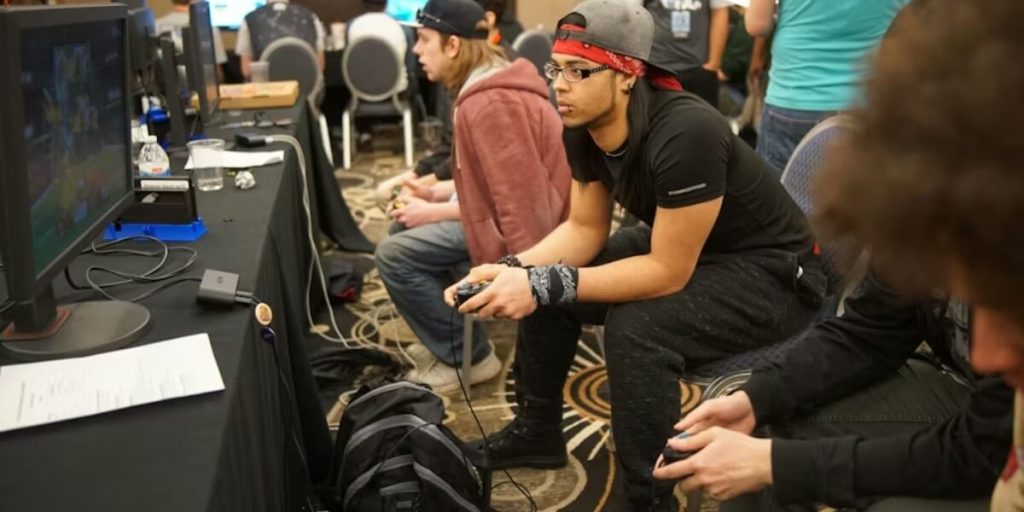
There are so many ways in which fans can become a part of sporting events these days. Among the most popular ways in which people interact with the sports entertainment industry:
- Virtual marathons and fitness competitions. Participants complete tasks in the real world, and their results are recorded online.
- Online fantasy leagues. Users create their own teams and compete based on real player statistics.
- Interactive fan zones. Digital spaces where fans can communicate and participate in activities during matches.
- Virtual car racing and simulation tournaments. Athletes and fans compete in special simulators.
- Joint streaming and match commentary. Fans discuss the game in real time via streaming platforms.
This is how the sports industry has changed and begun to treat fans not simply as viewers, but as active participants in the broader ecosystem.