
The history of the internet, in many ways, is the history of how human communication has evolved. In the early days of the web, the internet was mainly for finding and consuming information. Most websites behaved as publications, where organizations created content and users read it. Over the years, this was going to change with new tools and devices like smartphones.
Web 2.0 transformed the web as it became a more participatory landscape. Blogs, social networks, wikis, forums, social bookmarking, and user-generated media gave people new ways to publish, collaborate, and connect with one another. In the new landscape, the user was no longer simply an audience member; the user became a contributor. The user was no longer simply an audience member; the user became a contributor.
Over the years, communication became even more immediate and personal. Smartphones put the social web into our pockets. Messaging platforms replaced many traditional forms of communication, while recommendation algorithms increasingly determined which conversations, people, and ideas we encountered. The internet was no longer a place that we visited. It became and environment through which much of our social interaction took place.
Generative AI introduces another significant shift.
The advancement of AI has provided us with new ways to communicate. The systems through which we communicate can increasingly participate in the communication itself. For example, an AI system can write a message, summarize a conversation, translate between languages, suggest a response, change the tone of an email, generate an image, or interpret information shared by another person. Instead of technology providing the channel between two people, AI can become an intermediary. Sometimes it can become an active participant in the exchange.
AI and Personalized Communication
AI tools can analyze a vast amount of data, including user behavior and communication patterns. They are smart enough to infer user preferences. Using this data allows them to create tailored communication strategies. Take the example of customer service chatbots that can answer your questions regarding products, services, and orders. They can even anticipate your needs on the basis of your past interactions. It is improving the customer satisfaction as they get fast access to their solutions. AI is also being used to run targeted ads focusing on specific demographics and interests. You may have experienced it by visiting any store, exploring their products, and then starting to see their ads appearing on different sites you visit.
AI and Language Translation
AI has reduced language barriers. Now people from one side of the world can communicate with the other side of the world using AI. Even if someone is from Africa and participates in any conference in Europe or America, AI can help bridge the communication gap.
Beyond language, AI can also translate complex documents. It helps researchers, writers, and people from different professions to come together and collaborate with each other.
Automated Communication Through AI
AI is transforming the way businesses communicate to their customers. Now businesses are training their AI agents to provide 24/7 services to their customers. AI can handle basic inquiries and troubleshoot problems without human interaction. For example, both Hostinger and Namecheap have their AI agent active to handle customer queries. After the launch of GPT, Astra AI has become even more powerful. A user can request a human agent if the agent cannot handle a problem.
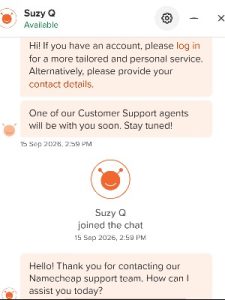
With the launch of GPT Astra, AI has become even more powerful.
AI Systems as Virtual Assistants
AI can now become your powerful business partner. Now it can create a website, write content, and make a marketing strategy that takes only a few minutes to a few hours. From idea to launch, it can automate the entire process. It also handles customer queries depending on how much you have trained it. Using AI is like hiring a business partner as an online assistant that takes care of your business alongside you. It even works when you are not working for your business.
Ethical And Privacy Concerns in AI Communication
AI systems are trained on a vast amount of data. How this data is collected and used is a major cause of concern for many users. Usually, AI pulls data from personal conversation, email exchanges, and social media interactions. This surely raises questions about the collection and usage of this data.
Relying on technology can bring many benefits, but it does not diminish the importance of human connection. Effective communication does not only rely on information exchange; it also depends on empathy, understanding, and shared experiences. It is crucial to balance human connection and automation.
Another issue is bias in data. For example, if an AI agent is trained on biased data, it can lead to discriminatory communication practices. Moreover, the overuse of technology in communications can lead to less social interaction. So, it is important to devise strategies to address this.
The Future of AI In Communication
AI systems are becoming more advanced over the years. Looking at the future, it seems the role of AI in communication will grow in different industries, especially health, education, and entertainment. AI is enhancing the efficiency and effectiveness of communication in different industries. However, it is important to address the ethical, privacy, and data concerns.